Africa Credit Challenge: Predicting Loan Default
From Raw Data to an Actionable, Business-Ready Credit Scoring System
Problem Statement
The core challenge of this project was to tackle a real-world loan default problem defined by severe class imbalance. With only a tiny fraction of loans (1.8%) resulting in a default, a standard model could achieve over 98% accuracy by simply guessing 'No Default' every time. The true business problem, therefore, was not just to be accurate, but to build a model that could reliably find this 'needle in the haystack'—the small group of high-risk applicants—without incorrectly flagging a large number of good customers.
Methodology & Approach
1. Deep Exploratory Data Analysis (EDA): I started by diving deep into the data to uncover the key drivers of default. The analysis revealed several powerful signals: 'New Loan' customers were over 10 times more likely to default than 'Repeat Loan' customers; specific loan types carried significantly higher risk (some with >70% default rates); and defaulters generally took out larger loans for longer durations.
2. Advanced Feature Engineering: To give the model a richer understanding of customer behavior, I engineered two crucial sets of features. First, I extracted time-based features like the month and day of the week from the loan disbursement date. More importantly, I created a historical profile for each borrower by performing customer-level aggregation. This generated powerful new features like a customer's average loan amount, their total number of loans, and the standard deviation of their borrowing, transforming the dataset from individual transactions into a story of customer behavior.
3. Iterative Model Development & Selection: I built and rigorously evaluated a series of models to find the best solution. I started with a simple Logistic Regression to establish a baseline F1-Score of 0.22. I then demonstrated a massive performance leap by using a Random Forest (F1-Score: 0.57). Finally, I trained and compared three industry-standard gradient boosting models: XGBoost, LightGBM, and CatBoost. Throughout this process, I used stratified k-fold cross-validation to ensure the results were stable and reliable.
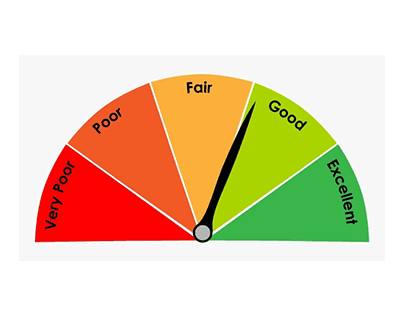
4. Creation of a Business-Ready Credit Scoring System: The final, and most critical, step was to translate the model's technical output (a raw probability) into a practical tool for business users like loan officers. I analyzed the distribution of the champion model's predictions and designed a data-driven, 5-tier credit scoring function. This system automatically segments applicants into clear, actionable categories (from 'Very Low Risk' to 'Very High Risk') and provides a recommended business action for each, such as 'Auto-Approve' or 'Requires Manual Review'.
Results & Insights
The XGBoost model emerged as the clear champion, achieving a phenomenal F1-Score of 0.75, a massive improvement over the baseline and a significant lift over the Random Forest model. This demonstrates the power of gradient boosting for this type of complex, tabular dataset.
The performance was also highly stable, with a very low standard deviation across all cross-validation folds. This gives high confidence that the model's performance is real and would generalize well to new, unseen data.
A key insight from analyzing the model's predictions was that the distribution of default probabilities was strongly bimodal. The model was highly confident in its decisions, with a large peak of predictions near 0 (very safe) and a smaller, distinct peak near 1 (very risky), with very few 'unsure' predictions in the middle. This clear separation is the hallmark of a well-calibrated model and is what enabled the design of the effective 5-tier scoring system.
Impact & Value
This project goes beyond a simple prediction model; it provides a complete blueprint for an automated, data-driven risk assessment tool. The credit scoring system allows a business to instantly segment applicants, automate decisions for the most clear-cut cases ('Very Low Risk' and 'Very High Risk'), and strategically focus the valuable time of human underwriters on the more ambiguous 'Medium Risk' cases.
It showcases a full, end-to-end data science workflow—from understanding a raw business problem and performing deep analysis to building, evaluating, and ultimately translating a high-performance model into a practical, value-driven business solution.